
Cruyff Football Hub
C14 Pitch Blog
Cruyff Football: the football legacy of Johan Cruyff
Jordi Cruyff immerses us in the essence of the game that catapulted his father to the top of world football. The ideas, methods and tactical concepts that were once exclusive are now accessible to all thanks to Cruyff Football
Cruyff Football envisions a future where Johan Cruyff’s football philosophy serves as a cornerstone, fostering innovation, education and inspiration to shape the global football landscape, paving the way for a transformative and enduring legacy.
No one knows better than Jordi Cruyff the meaning behind his father’s iconic phrase “go out and enjoy yourselves”. A philosophy as simple as it is challenging to put into practice on the pitch. Johan Cruyff did not hesitate: he preferred a scoreline of 5-4 a thousand times more than 1-0; he enjoyed and made people enjoy taking risks. With ingenuity, he created astonishing moves, maximizing the potential of his squad both individually and collectively. He approached challenges not as problems, but as opportunities to find solutions.
The secrets of positional play, the planning of training sessions, the game of anticipation, the convergence between giving freedom and assuming responsibility, and the development of homegrown talent as a fundamental key to the sustainability of a team are all ingredients of Johan’s ‘Total Football’ that the Cruyff Football initiative offers worldwide.
In this interview, Jordi Cruyff helps us to understand his father’s football philosophy, translated into this initiative that aims to take football to another level.
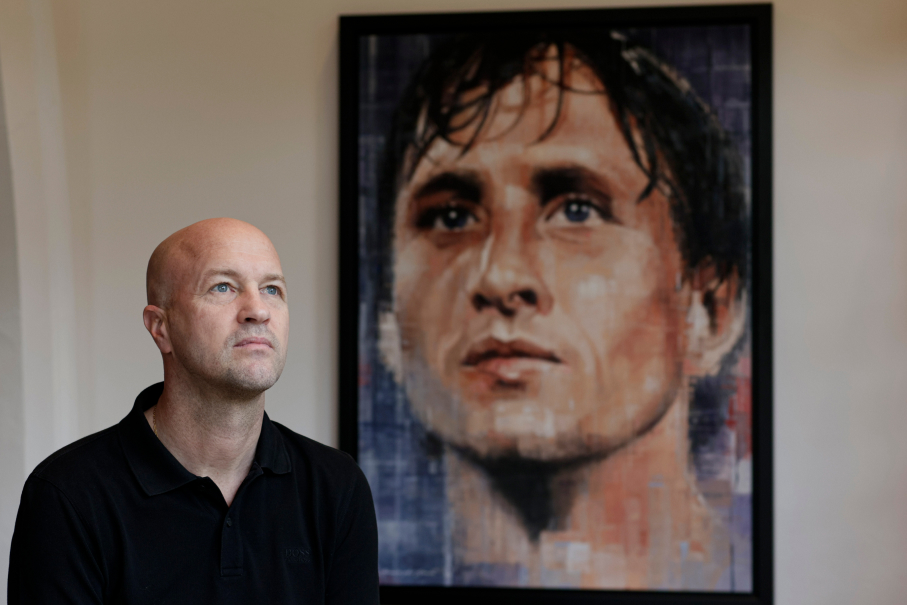
Behind the well-known ‘Go out and enjoy yourself’ there is a whole philosophy of the game. Where does it come from?
I think my father said this comment a few minutes before the Champions League final, and what he really meant to say was: Go out and enjoy yourselves… Go, play to enjoy yourself, don´t put pressure on yourself. Yes it´s a final, but if you enjoy yourself you´ll play better.
Experts say that after the 1974 World Cup, in which the Netherlands team, captained by Johan, eliminated Argentina, football changed for good. What changed with Johan?
I think in 1974, it was the World Cup that people talked about Total Football for the first time. People almost spoke more about the losing finalist than about the winning finalist, because they changed something different. It was Total Football, having the positions on the pitch occupied, but every time by different players, which means a lot of movement between them, not fixed positions. But all the players were just moving around, the striker would come to the midfield, the midfielder would go to the striker’s positioning. It was very difficult to follow for the opponents, especially at a moment that football was quite a lot man-to-man marking on the pitch. Of course, when suddenly the striker is 30 meters out of position, and you follow the striker, you´re also out of your position, which makes space for others. But I also think I remember images from the World Cup, especially with the offside trap, that the Netherlands national football team were doing, the way they were putting pressure, maybe with six players at the same time to one opponent. And you think that it was already in ´74, so many years ago, and already there, a little bit had changed, this rebel kind of playing football started with The Netherlands then.
Cruyff Football is Johan’s football legacy on a technical level. What is this philosophy?
I think my father had vision. First, by character, he was rebellious. If 100 people got in a queue, he would go to the other one. It comes a little bit from his character, probably being Dutch. So, on a football level, it is known that he was a person who gave more importance to intelligence than to physique, at the time. It is also true that football is changing and suddenly during some time it gives more importance to one thing and then it can change to another. It is the evolution of football and sport in general. But he always said that intelligence goes faster than the ball. In other words, if you anticipate, you are faster than running. In other words, intelligence is faster than the legs and also faster than the ball. If you play the ball fast, you are faster. He tried to give it a logic, it was curious to listen to his soccer philosophies or his ideas in the press conferences. I remember one in which he said, it sounds crazy, but it’s logical: he said to his central defenders: ‘what does the striker do best? He can get unmarked. Well, we’re not going to mark him’. You’re left thinking: ‘this coach is joking, or what is he saying’. It’s basically logical; if it’s your strong point, do something so he can’t take advantage of it and hurt you. Then how you convey that to the players on the field… He was able to do that.
I think my father had vision. First, by character, he was rebellious. If 100 people got in a queue, he would go to the other one. It comes a little bit from his character, probably being Dutch. So, on a football level, it is known that he was a person who gave more importance to intelligence than to physique, at the time.
Another of Johan’s statements was “playing football is very simple, but playing simple football is the hardest thing there is”. What did he mean by “simple football”?
I think by simple, if you have the ball and you need five touches you are complicating yourself. If you can play one touch it´s simple, but at the same time to play one-touch football is the most difficult thing there is. So, I think what he was trying to say is: “If you can take two touches instead of three, take two, because that means that you are simplifying the game. But also, the passing between the team members will be quicker, which means that your teammates will be maybe in a better position than if you delay passing that ball, and then the opponent team can organize themselves better. So, I think his vision, or the meaning of having good technique, was not how many times you could keep the ball in the air, and if you could do these funny YouTube tricks, but his football view was: “Perfect technique is if you can do it in one touch, because if you need two or three touches it means that you didn´t do it in one touch.” And for him, perfection was one touch.
He believed that players should have the freedom to move and create goal-scoring opportunities. In that style of play, giving freedom means transferring responsibility. Do you think this is a key principle for every good coach?
I think the first thing a coach has to understand, depending obviously on his soccer vision, the squad he has and the club’s DNA, is the set of things that make up a certain philosophy. But I think my father’s vision was that creative players have to be given options. Creative players are usually intelligent, they are considered that way because they make the right decisions. So you have to put the creative player in a position where he can bring out his strengths, which is, for example, decision making in the final third, and then you have to bring the ball to him in such a way that he just has to turn and choose the best option, or the creative option. I think that was for him one of the things he tried to do, for example, playing Laudrup sometimes as a striker, so that he would come in with the ball and then turn and then he would have two players who were wingers, but they would always have a vertical run towards goal and Laudrup was the perfect passer, so what I mean is that in his head he was thinking the following: “Try to enhance the strengths of each player, so that they can show it more times during the match, because then you will get good results.” And players who have a weak point, try to protect them in a way that they won’t be noticed. And if he is creative, put him in a position on the field where he can be creative and he can show the best of himself. And then other players who maybe didn’t have the creativity, they would have more work, which is what they have to do. Ask players what you can ask of them, don’t ask them what they can’t give. Try to identify the strengths, the weaknesses, and then the weaknesses should not be visible, and all the attention should be focused on the strengths, to maximize them.
What did you most admire about your father on a professional level?
I think my father, especially during his time at Barcelona, as a coach, when people saw the lineup, the tactics he used, and he was so revolutionary, they thought he was crazy, until the results came and then, suddenly, they changed to “he’s a genius”. It just goes to show that the line between madness and genius is a fine one, and he got it? finally the results came! He generated a confidence and then people started to believe in this revolutionary way. To give an example, he once told his central defenders the following: “Okay, let’s play against this team this weekend, in which a striker is playing. Let’s analyze this player, what is his strong point?” And they said, “Getting free when he was marked, because his style is to make a move to get unmarked, he is very good at unmarking.” So he answered them, “Okay, we’re not going to mark him, because if you’re not on him, he can’t get unmarked from you.” Of course, it’s difficult to answer this to 30, 31-year-old professional players, to try to say this to defenders who have played 400 games, to convince them that “we’re going to do this to know what the striker is going to do”. Strikers are used to having a man to mark him physically, and if suddenly he has no one, what is he going to do? It sounds crazy, illogical, but that’s how he did it. A different mind, a different mentality, a revolutionary, a rebel.
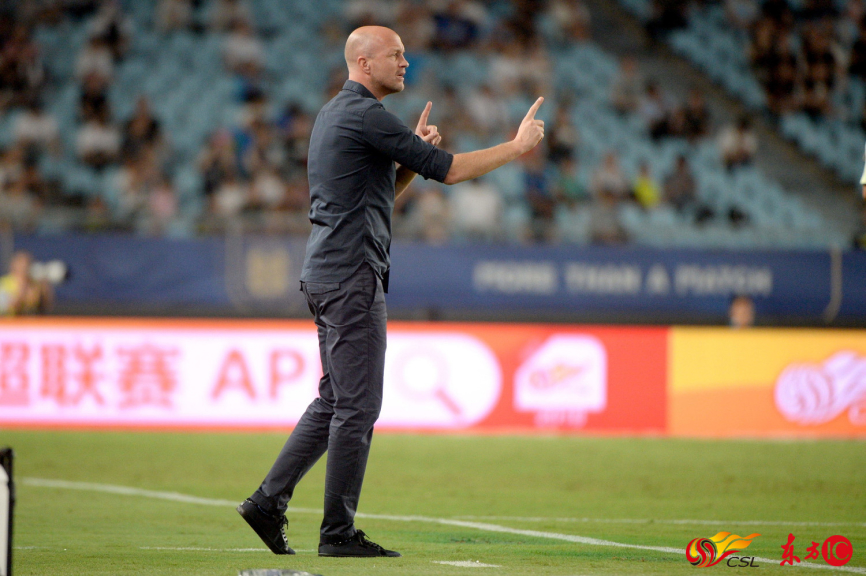
All those who admire Johan’s tactical excellence point out that he was able to see and take advantage of things that, however obvious they might seem, others were unable to see. Is there anything that you have tried to take with you to the teams you have coached?
It’s very difficult, because copying a genius is very difficult, let’s be honest. Also, what he had – and this made the players believe in him more – is that in training he could say: “Listen, I want you to do this, this and that”. And the players would look at him, but he actually had the potential to say, “Give me the ball,” and he was 20 years older than them and he would show them physically. He would tell them, “Give me the ball, this is what you do.” And the players would look and say, “Wow, if he can do it at his age, we can do it too.” So, a lot of times I think he built confidence, being able to show it himself, physically. And he had a peculiar language, in Spanish, in Dutch, or even in English, he always mixed some words, which sometimes could make it difficult to understand, but he had the potential and the option to say, “Give me the ball, I’ll show you what I’m trying to tell you.” And he would do that and then the players believed in him. He could build trust easily. And on a personal note, I would say when I’ve coached in something, and maybe you have a doubt, you feel like you’re losing or losing control of the game, and it’s the 60th minute or the 70th minute or whatever minute, and you feel like you’re losing it. You know you have to change something, and you’re hesitating between two or three different options, so you talk to your assistants: “What do you think?” And this and that, and just to get more ideas, and then when I really don’t know… when it’s 50/50, two options, I’m not sure, I always go for the one that is the most offensive substitution. A lot of times, I’m on the bench, and I’m thinking, “I’m going to do this and… (pointing to the sky) and see if you were right!”and to be honest, when the result came, I always thought about my father, you know, what would he do in a moment like that? Which is very hard to know what he would actually do, because he would always do the opposite. But especially the offensive change. If you’re not sure, do it. If you’re going to lose, at least lose because you’re trying to win.
Football today is much faster and more physical than it was 15 years ago. What do you attribute that to?
First of all, I think football is an ever-changing sport. Football changed to what it was 10 years ago, 20 years ago, 30 years ago, 40-50 years ago… We keep evolving, we do not know how long football will stay like this, maybe in 10 years it’s going to be completely different, but at the moment it is true that there is a lot of the word ‘transitional’. It’s something that 20 years ago nobody talked about, but now it’s one of the keywords of football. Things are faster, especially a little bit more vertical. When you recover the ball, the first idea is not to keep possession but to run to the opponent’s goal, thinking that they might not be so well organized, because they were trying to attack, and the quicker you go for them… It´s a bit the changes of football. I think also the players are probably better prepared individually and collectively. There is a lot more data, with GPS data, and studies of how strong we are going to train today, and tomorrow has to be a bit less, and then the next day has to be 25% or 30% more… There is a lot more information coming from more studies and from technology, like I said the GPS or all the data, so I think the preparation is also different, and maybe better. Also, you see a huge change, before when you were 21 was when you made your debut, and the first times you were considered a young player. Nowadays, they´re making a debut at 18 already. Before you used to retire at 32-33 years old, now they can play at a super high level at 35-36. So there are a lot of tendency changes in football. But probably the transitional part has to do with maybe that there is a little bit fewer individual dribblers on the pitch, so when you don’t have them, that means, when you recover the ball, you need to go as quick as you can to try to score against the opponent, so it all looks more physical. Also, the fact that you have the GPS data, it means that there are more comparisons for the coach to see who worked harder and maybe who worked a bit less hard, so the players know that, so immediately you work a lot. The fact that there is more of losing the ball means that there are more transitions. And if you do not have the ball you would have to follow the opponent. That is just how football is nowadays.
I think for the head, if you think beforehand, you can anticipate too many situations. So, the brain is faster normally than a ball because you can anticipate things. The same goes for the legs, the ball is faster than the legs, such as running.
Is anticipation still a key factor in this greater speed?
I think for the head, if you think beforehand, you can anticipate too many situations. So, the brain is faster normally than a ball because you can anticipate things. The same goes for the legs, the ball is faster than the legs, such as running. If you give a strong pass or run with the ball, the pass will arrive before than if I run. If I run 100 meters, then probably I would need more than 10 seconds. Well, for sure I need more than 10 nowadays, I need much more, more than 10 seconds. But if you kick the ball well, in 4 seconds the ball is already there, or in 6 seconds. So the ball is quicker than the legs, but the brain is quicker than the ball sometimes. So, in that aspect my father always gave a lot of importance to the brain, to the capacity. And for example, if I am a slow player and I need to sprint against a fast player I will always lose, but if I see what is going to happen 2 seconds before the fast player, then I will still arrive before. That is why my father always felt that it was very important to have intelligence, have a good intuition of what´s going to happen, but also intelligence is faster than anything.
What do you look at when you sit down to watch a football match?
I watch the individual, but also the tactical, how does one team do this, how does the other team respond to that? I like to watch football in that way. Also, something that is becoming more scarce in the world of football is to have pure dribblers. Nowadays, for example, the wingers are on the opposite foot—on the right is the left footer or on the left is the right footer. And they come inside, and when they come inside it’s more to make one-twos with players that are in the middle. Sometimes we do miss those special players, who are right footed and they could play on the right side, and can dribble inside and outside, who had a one against one. I think that when I see a player that has this one-against-one talent, I love to watch it.
One of Cruyff Football’s value propositions is helping coaches to ‘create something out of nothing’. Where do you start to build a team? What should be the foundations?
I think the foundation, first of all, depends on where you are coaching. If you are coaching on the highest level, professional, you know the results are going to be there. Then I think the first thing you need to do is to analyze—you have your football philosophy, but you have a club DNA, but you also have the players—and you have to be realistic: “Does what the club wants and what I believe in, and especially the players, can they fit into the club´s idea? My idea?” I think that´s a study you always need to make and you need to adapt, because nowadays it’s very difficult to get so much time in the business of quick results, because that’s where football unfortunately is going… Then the first thing you need to understand is to analyze yourself, analyze what the club wants and their DNA, and what the players can give and maybe you have to adjust yourself to the squad that you have. I think that when you are looking at young players and you are talking about forming young players, then it is individual, collective, but sometimes you allow a young player to make a mistake, so that he will not make it twice. And in professional football what you try to do is not allow them to make a mistake because you can lose the game. So, the whole philosophy is different, in professional football the result is nowadays more and more important, but when you are young, the team result is not the most important; it is teaching a young player to get better and better. If it is possible, on a weekly basis. So, the whole philosophy is different.
Johan also greatly advocated for giving opportunities to young players, accompanying them in their transition to professional football. What should this talent incorporation be like?
First and foremost, working with emotional stability. The help of parents and the environment of a young boy, keeping their feet on the ground, is very important. In football, as in sports in general, you have a dream and not everyone achieves it. How do you react to difficult moments? I believe there should be quite a personal and individualized follow-up for that player, as well as for the group, but especially for that player because they are a young boy and it may happen that an injury breaks their career, they haven’t fulfilled the dream, and life goes on. My father believed in giving opportunities, but, for example, in my case, I remember making my debut in Barcelona’s first team, we won 2-1, I scored a goal and provoked a penalty that led us to victory. After the match, he said to me: ‘Well, you’ve already shown that you can do it, but now I’ll send you to the reserve team for four games to see if you have the right mentality. I want to see if you keep your feet on the ground or if you grow too big; if it’s the latter, you’ll stay there.’
After the match, he said to me: 'Well, you've already shown that you can do it, but now I'll send you to the reserve team for four games to see if you have the right mentality. I want to see if you keep your feet on the ground or if you grow too big; if it's the latter, you'll stay there.'
Of course, I didn’t understand it, but in the end, it’s part of education, of having stability, and if you’re unstable because you’ve scored a goal and you already think you’re a star, well, in the end, that’s not the way. My father paid a lot of attention to those details. Moreover, my father, if at any moment a young player got bad grades at school, was indifferent, so maybe he wouldn’t let him debut when it was time to debut when the kid deserved it. For my father, behavior off the field was very important to have those opportunities. Nowadays, it’s also true that football has changed in this regard. Before, if you debuted at 21, you were a young player. Nowadays, if you debut at 21, football has changed so much that you’re a bit late. Just like before, at 32 it was time to retire, and nowadays there are players at 35, 36 years old, at a very high level. What I mean is that they debut earlier and retire later, and there are many years in between where the footballer has opportunities in their career for a long time. And also, for example, there are many cases of players who may have debuted by chance and then became stars. Maybe two weeks earlier the plan was to go on loan and they didn’t because a teammate got injured, they come in and become legends of a club. Without mentioning names, but there are many cases like that. So, as a coach or as a young player, what you plan with a young player doesn’t always happen. That’s why you have to be prepared and work every day with the hope of fulfilling your dream.
The platform
How did the idea of creating the Cruyff Football platform come about? Tell us a little bit about its history.
Well, I think my father left so much behind, but also in terms of thinking out of the box, to think differently. I think a lot of people always had questions about trying to understand. It does not mean that you try to do the same, but I think that football is everywhere in the world, and in every business nowadays it is important to learn different ways of doing things and then you decide your own path, what you believe in. But it is also good to know other things, maybe you don’t like, but at least that you can understand. And maybe from another point of view there is something that you like and you will introduce it to your own philosophy. I think it is very important to be open-minded and I think my father had such a different view, a rebel view on many things, that I think it is good that there is an explanation to it, that people understand why he thought a certain way and why he did it. Just to give that kind of information. And then every individual will decide what they want to take out of it. It’s impossible to copy, to copy everything, but at least there are things that you might say: “Wow! I didn’t think about that, and it’s a good idea. I’m going to try it.” I think the platform is trying to help people to be more open-minded and to be organized. I remember even for myself, you have a game on Sunday, you analyze the opponent, you know how you want to play, and then you have trainings that have to lead up, so that the players understand what you are looking for at the weekend. You do not do exercises just for the sake of it, but you also do exercises in which the player might not even know why he is doing it, but what you are actually doing is creating in his mind: “We are doing this and we are doing it small, because in four days we have the game and we want to do it on the big pitch.” Now you do it with a reduced number of players, but it is good to have an understanding of why you are doing certain exercises, not just because you like them, or the player likes them, which also helps. But there has to be an idea behind every exercise. And that is why I think the platform tries to give a lot of explanations, so that people will understand why certain exercises took place. In the case of my father, why he liked certain exercises and repeated them a lot. Why he thought it had to be necessary, where the benefits were.
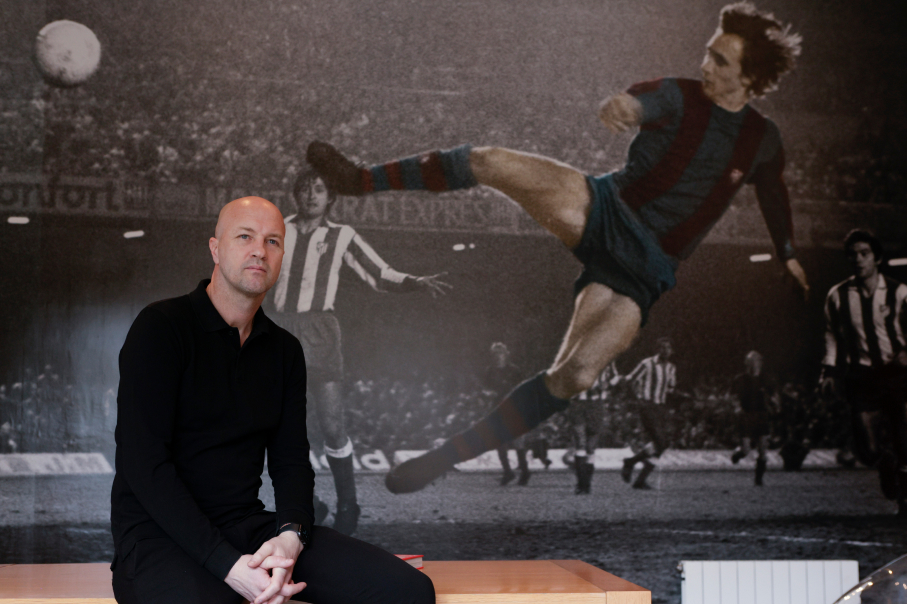
What is the company’s objective and what values does it most identify with?
With values of formation, of teaching. Everyone can have a different vision of football, but to improve, it is important sometimes to know the opinion of others, different football ideas, not just one, but to listen to one and discern; there may be things you don’t like, but there are things you hadn’t thought of before and may find interesting. That’s why I think it’s good to be open-minded, to listen to different ways of thinking, different trainings, exercises. I believe that the coach today, even though they have a tactical playing philosophy, has to find the most suitable exercises according to their idea, something that is very difficult. It is very complicated to invent exercises for that idea you have, to put into practice certain exercises that, fundamentally, aim at how you want to play the match that weekend. In that aspect, we try to help, it’s simply one more tool to listen to something different, or to organize yourself, or to understand why we do these types of exercises on a Tuesday or Wednesday, why those days and not a Friday? And ultimately, for a coach, the goal is to create a playing philosophy; it’s a tool for assistance.
Who is it aimed at?
To everyone. The most flashy, most visible football is the professional one, but there are millions and millions of youngsters playing at a non-professional level. There are millions of youth coaches who aren’t on television every weekend, but who have the same love and passion for this sport. I think it’s important to somehow create a platform for all kinds of coaches at all levels.
What do today’s coaches need on a tactical level?
I think basically the most important thing today is the staff. There is a lot of information, there are many things to do, both at the group level and many individual things that need to be explained to the players, so that they understand. It is impossible for a single coach to do it. It is important to have a good staff, in which all important areas are covered by professionals who are often even better than you as a head coach. Because I think nowadays a head coach has the idea and tries to explain the path he wants to take, but in the end you need help from everyone. Nowadays, being a coach is also about leadership and creating trust in your idea. It’s no longer: “I’m your coach, I’m the boss, you have to follow me.” The trick is to create confidence in the players, to make them believe in what you are doing, because then they will play much more confident, and usually that gives much better results. And it is also important to communicate this. Because if you have great ideas, but you don’t know how to communicate them to your players, then they will never understand. Then you won’t have any results. Therefore, I think it is important to surround yourself with people who understand you, who sometimes challenge you, who are not afraid to give their opinion. And try to cover all the areas that are important. Nowadays, all players are different, they have a different mentality, and you need to try to connect with everyone. And it is impossible for one person to do all the jobs. Therefore, the staff must be made up of specialists: one perhaps in training exercises, another in strategy plays, another in individual work, for the defensive line, for the midfield line, for technique. Nowadays, training is a team effort, but the coach is the leader, obviously he is the one with the most visible job, but you need everyone’s work.
Nowadays, being a coach is also about leadership and creating trust in your idea. It's no longer: "I'm your coach, I'm the boss, you have to follow me."
Albert Capellas said that CF is the platform he would have liked to have had when he started coaching. Do you understand what he meant by that?
Yes. When I met Albert many years ago and I heard him talk about football, I understood he spent a lot of hours watching all the training of Barcelona, already even in the 80s, and to understand why this exercise and that exercise. And I think he is one of the people who better understands, and especially who can better explain, a lot of the values, ideas, or football philosophies that my father had. Because one thing is to see it, another thing is to explain it and that other people can understand it. And in that aspect, Albert is one of the people that can still better understand and explain the philosophy of my father and why certain exercises in the training are important to reach your objective.
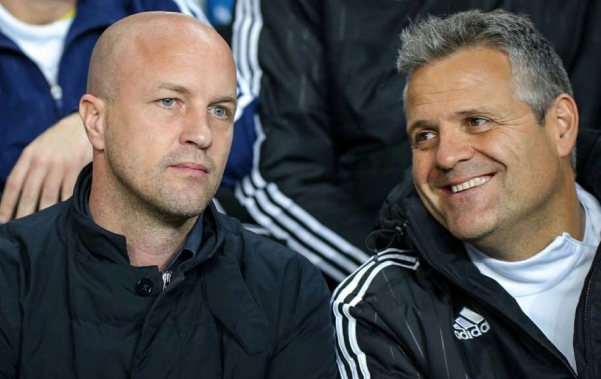
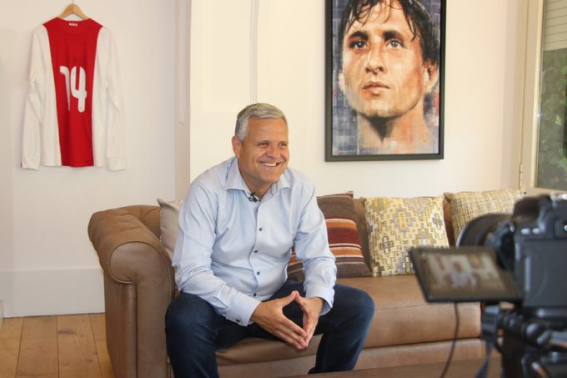
And he also mentioned that when you were in China, he was working on the computer, and you were around him and asked him: “What are you doing…?”
Yes, I remember my seat was at the end of the room, I came inside, and I already noticed that Albert, after trainings, was many hours focused on his computer. And one day I watched and I saw some things moving, some exercises, and I asked him: “What are you doing?” and he explained the idea to me. And from then on, I remember actually telling him: “If we ever do it, we do something together, because you have a lot of exercises that are from my father, so let’s see…” And to be honest, I really like the way that he tries to simplify things, because football is not easy to understand and there are many things that happen that can change the outcome. So, when I saw it, I said: “I like that idea, and I think you are the person who can best explain a lot of things of my father’s philosophy.”
Cruyff Football Coach Certification
C14Pad App
On Site Services